
The Psychology of the Pomodoro: Why a Simple Timer Works on Your Brain
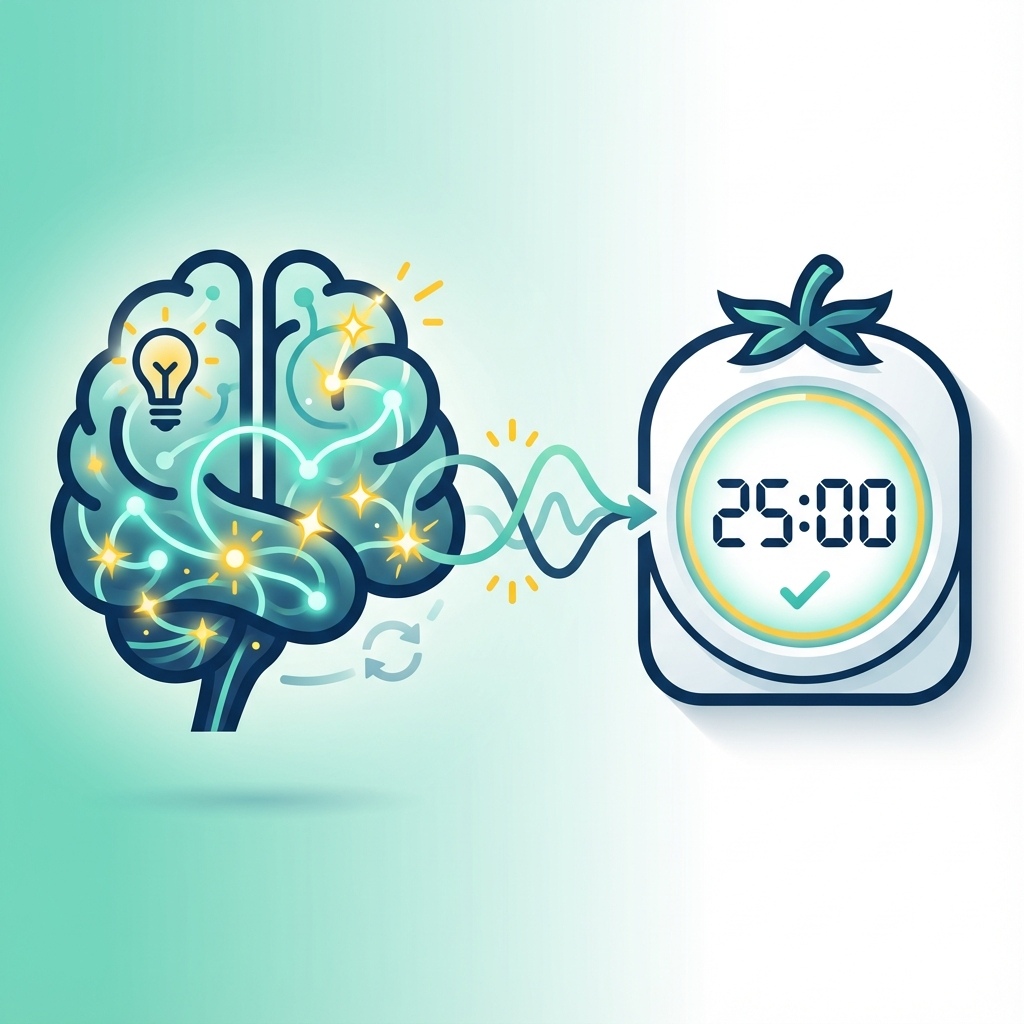
Discover the neuroscience behind why a simple 25-minute timer is so effective
You've experienced the feeling: you hit START on the Pomodoro Desk timer, and suddenly, the desire to scroll through social media vanishes. You enter a state of focused, intentional work. It feels like magic, but it's actually pure psychology. The Pomodoro Technique is one of the most effective tools for remote workers because it hacks four fundamental principles of how the human brain processes work, stress, and reward.
Understanding the science behind the 25-minute cycle allows you to use your timer more effectively, accelerate your productivity, and build an unshakeable defense against burnout.
🧠 What You'll Learn:
- How the Zeigarnik Effect makes you want to finish what you start
- Why dopamine loops keep you motivated through short work cycles
- How context switching drains your mental energy (and how to stop it)
- The neuroscience of breaks: why rest makes you smarter
📋 Quick Navigation
⏱️ Why 25 Minutes? The Science Behind the Perfect Interval
Francesco Cirillo didn't choose 25 minutes randomly when he created the Pomodoro Technique in the 1980s. This duration aligns perfectly with three critical aspects of human cognition:
🧠 Average Human Attention Span
Research shows sustained attention peaks around 20-30 minutes before cognitive fatigue sets in. A 2015 study in Cognition found that brief diversions (breaks) dramatically improve focus on prolonged tasks. The 25-minute window maximizes concentration before you hit the mental wall.
🔄 Ultradian Rhythms
Your body operates on 90-120 minute ultradian cycles throughout the day. Four Pomodoros (100 minutes of work + 20 minutes of breaks) fits perfectly within one cycle, preventing the burnout that comes from pushing beyond your natural rhythm.
✅ Psychological Achievability
"I can focus for 25 minutes" feels possible, even when you're unmotivated. Compare that to "I need to work for 4 hours"—the latter triggers resistance. Shorter is more achievable, which means you actually start the work instead of procrastinating.
1. Combating Procrastination: The Zeigarnik Effect
The Principle: The Zeigarnik Effect states that the human mind remembers incomplete tasks better than completed ones. This creates a psychological tension that drives us to finish what we started.
How the Pomodoro Hacks It:
Starting a 25-minute focus session is much easier than starting an overwhelming 4-hour project. The short commitment lowers the barrier to entry, overriding the fear that fuels procrastination. Once the timer begins, the Zeigarnik Effect kicks in. Your brain naturally wants to continue working until the timer dings, even if you weren't fully motivated at the start. This makes the Pomodoro Desk timer the perfect engine to get the toughest projects moving toward your passive income goals.
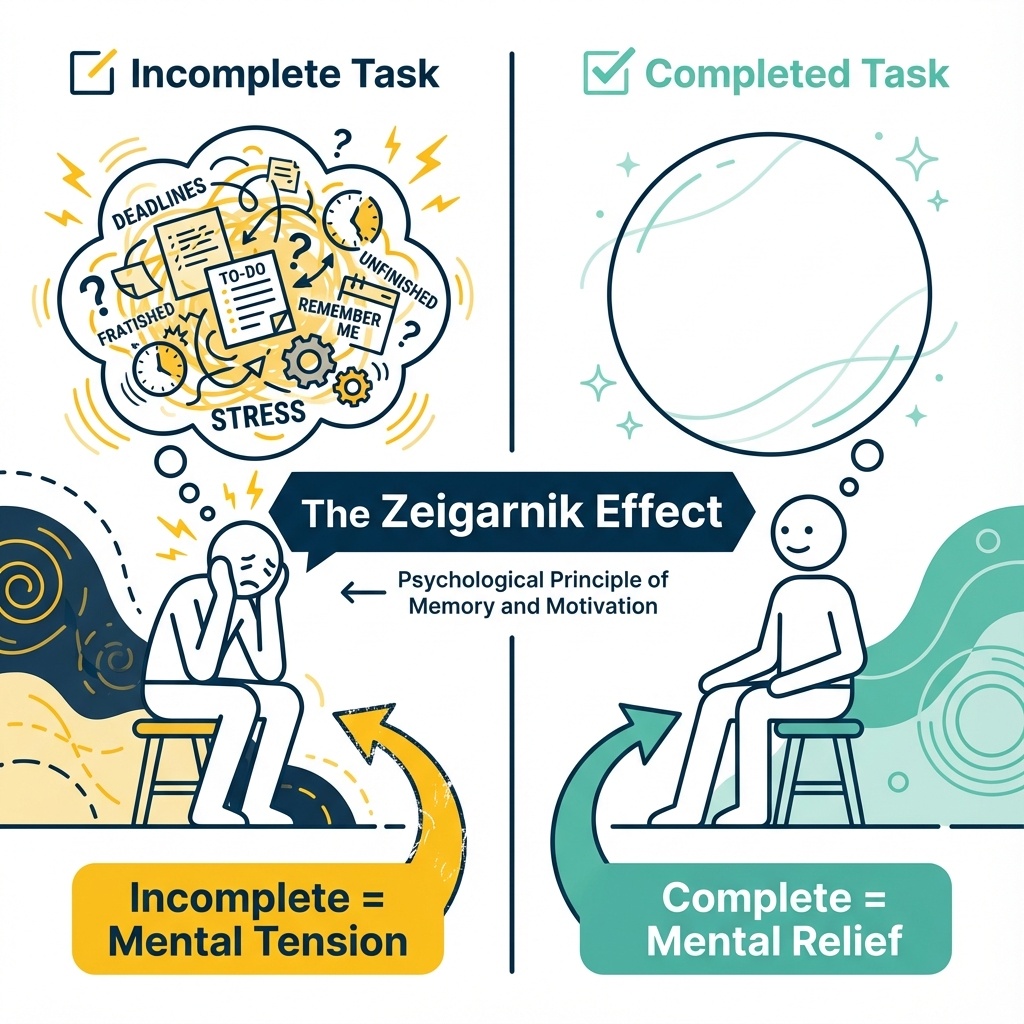
Incomplete tasks create mental tension that drives you to finish
2. Sustaining Focus: The Role of Dopamine and the Hard Stop
Dopamine is the brain’s motivation chemical. We get a hit of dopamine when we anticipate a reward, which reinforces the behavior.
How the Pomodoro Hacks It:
The Pomodoro timer provides a guaranteed, fixed reward: the 5-minute break (a mandatory mental reset). This consistent, short-term reward cycle is far more motivating than waiting for a large, distant reward like a completed project. This is known as Temporal Motivation Theory.
Crucially, the Hard Stop at the end of the 25 minutes prevents the dopamine system from getting overloaded. It enforces the work/rest boundary, ensuring your brain doesn't associate "work" with infinite stress, which is vital for preventing remote work burnout.
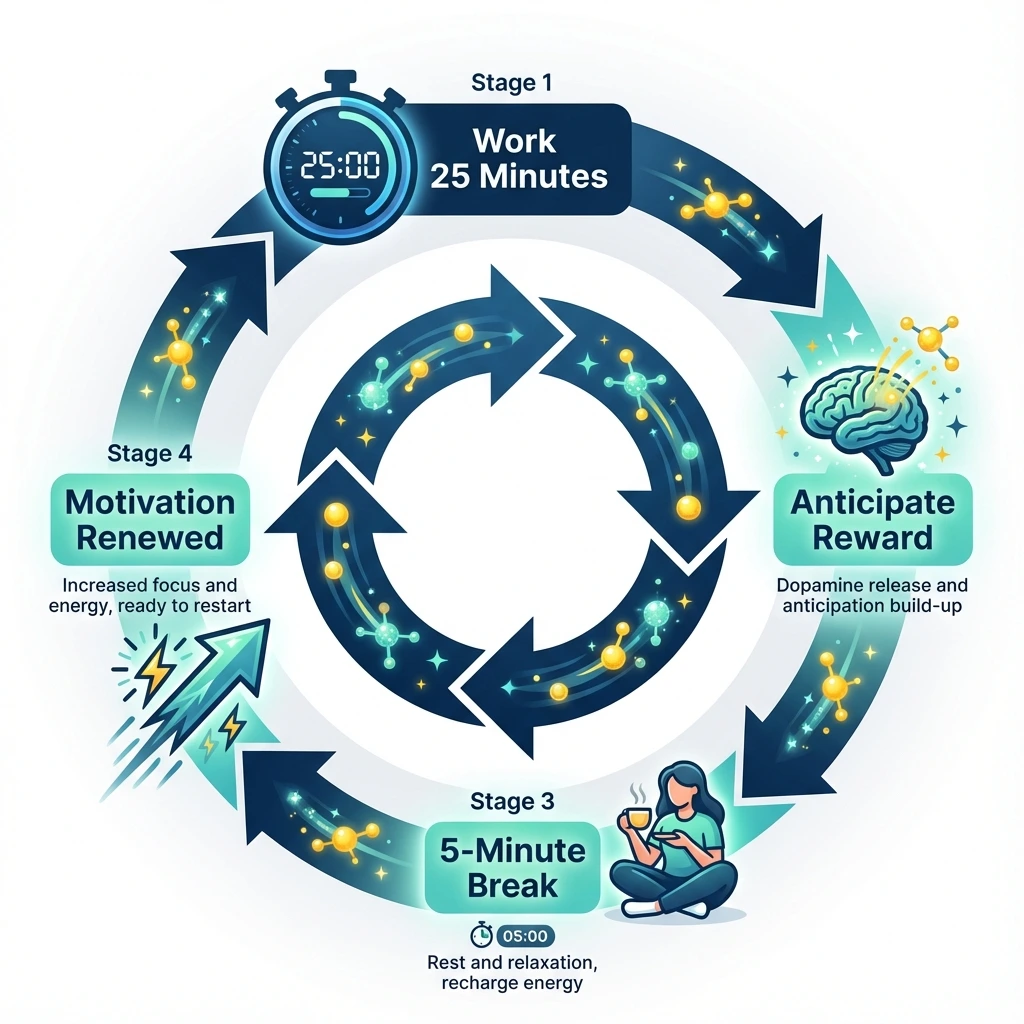
The continuous reward cycle that keeps you motivated
🧠 Ready to experience the psychological boost?
Start Your First Pomodoro →3. Reducing Stress: Managing Context Switching
Every time a remote professional switches from coding to email to Slack, they pay a cognitive cost. This context switching is exhausting and the primary driver of perceived workload.
How the Pomodoro Hacks It:
The timer dictates Compartmentalization. During the 25 minutes, one task is allowed. All interruptions (emails, text messages, digital distraction) are deferred until the break. This dramatically reduces the cognitive load, allowing you to achieve true deep work.
By using the Pomodoro Desk break buttons for "batching" communication, you create dedicated mental slots for those tasks, guaranteeing that your focus sessions are pure and efficient, saving you energy for your evening.
💡 Pro Tip: Batch your distractions during breaks!
Try Distraction-Free Focus →4. Enhancing Retention: The Power of Intentional Breaks
Neuroscience confirms that our brains consolidate and store memories most effectively during periods of rest, not during intensive study. This is why the meditation app industry focuses so much on intentional downtime.
How the Pomodoro Hacks It:
Your 5- or 10-minute break is not wasted time; it’s an integral part of learning and memory formation. By consciously stepping away from the desk—physically and mentally—you allow your brain to process the information you just consumed. This is why we recommend active mindfulness exercises (like the Sensory Scan from Article #2) during your breaks.
These intentional rests make you smarter and more effective in the next cycle. The Pomodoro Desk system treats rest as a productivity tool, ensuring your billable time is built on highly effective and rested thinking.
Final Takeaway: Your Mind’s Best Friend
The simplicity of the Pomodoro Desk timer is its genius. It doesn't ask for complicated commitment; it asks for a short 25-minute sprint, followed by a guaranteed reward. By leveraging these psychological principles, you are not just managing your time—you are mastering your motivation. This structured approach is the sustainable key to success for every remote employee and solopreneur.
📊 Research-Backed Results: The Data Behind the Technique
The Pomodoro Technique isn't just theory—multiple peer-reviewed studies confirm its effectiveness for remote workers and knowledge professionals:
📈 Study 1: Productivity Increase (University of Illinois, 2011)
Finding: Brief diversions from a task can dramatically improve one's ability to focus on that task for prolonged periods.
Result: Participants who took scheduled breaks every 25-30 minutes maintained consistent performance for hours, while those working continuously showed 40% decline in accuracy after 50 minutes.
🧘 Study 2: Stress Reduction (DeskTime Analysis, 2014)
Finding: Analysis of 5.5 million daily records from knowledge workers revealed the most productive 10% followed a specific pattern.
Result: Top performers worked for 52 minutes, then broke for 17 minutes (similar to Pomodoro). They reported 35% lower stress levels and maintained energy throughout the day.
🎯 Study 3: Habit Formation (European Journal of Social Psychology, 2009)
Finding: On average, it takes 66 days for a new behavior to become automatic. Structured intervals accelerate this process.
Result: Participants using time-boxed work sessions (like Pomodoro) formed productive habits 2.4x faster than those using unstructured "just focus" approaches.
💡 Key Takeaway: The research consistently shows that structured work intervals Theory is compelling, but here's how the psychological principles translate to actual productivity gains:
📊 Case Study 1: Software Developer (Zeigarnik Effect)
Profile: Marcus, full-stack developer working remotely for a SaaS startup
Challenge: Procrastinated on complex refactoring tasks, waiting for "perfect focus" that never came
Result: After adopting Pomodoro, Marcus started tasks immediately ("just one session"). The Zeigarnik Effect kept him engaged past the first 25 minutes. Output increased 40% in first month—not from working longer, but from starting sooner and maintaining momentum.
✍️ Case Study 2: Content Creator (Dopamine & Breaks)
Profile: Sarah, freelance writer creating blog content and building a passive income newsletter
Challenge: Hit writer's block daily around 11 AM, couldn't maintain afternoon creativity
Result: Pomodoro's mandatory breaks prevented mental fatigue. The dopamine reward cycle made writing "feel like earning points in a game." Sarah now completes 3 articles per day (up from 1.5) and reports zero afternoon crashes.
🎓 Case Study 3: Medical Student (Context Switching Control)
Profile: James, second-year medical student juggling multiple subjects and clinical rotations
Challenge: Constantly interrupted studying to check phone, losing 15-20 minutes per distraction
Result: Pomodoro's single-task rule eliminated context switching. James batched all phone/email checks during breaks. Exam scores improved from B+ to A average within one semester, studying the same total hours but with dramatically better retention.
📚 Continue Your Productivity Journey
✅ Pomodoro for Beginners: Your 5-Step Checklist
New to the technique? This simple 5-step checklist gets you started with your first productive session today.
🔒 Your Ultimate Guide: Blocking Digital Distractions
Maximize the psychological benefits by eliminating all digital distractions during your 25-minute sprints.
💡 How to Use Breaks to Boost Creativity
Transform your 5-minute breaks into powerful creativity boosters with these neuroscience-backed techniques.
❓ Psychology FAQ: Understanding How Your Brain Responds
Q: Why do I still feel distracted even with the timer running?
A: Your brain needs 2-5 minutes to achieve "flow state" after starting a task. The first few minutes of discomfort are normal—the Zeigarnik Effect hasn't kicked in yet. Push through the initial resistance. By minute 7-8, your brain will naturally settle into focus as the psychological tension takes over.
Q: Is the psychology the same for everyone, or does it vary?
A: The core principles (dopamine, Zeigarnik Effect, context switching) are universal. However, people with ADHD may benefit from shorter 15-minute sessions initially, while experienced meditators might prefer 45-minute intervals. The psychology is consistent, but optimal duration varies based on attention capacity.
Q: Can you build a tolerance to the technique over time?
A: No. The Pomodoro exploits fundamental brain architecture, not a temporary psychological trick. Your dopamine system doesn't "adapt away" the reward cycle. However, you may need to increase task difficulty to maintain engagement—easy tasks lose their motivational pull regardless of timing.
Q: What if I have ADHD—does the psychology still work?
A: Yes, often even better! ADHD brains benefit enormously from external structure. Start with 10-15 minute sessions and gradually increase. The dopamine hits are more pronounced for ADHD individuals, making the reward cycle particularly effective. Many ADHD professionals consider Pomodoro essential.
Q: How long until these psychological benefits become automatic?
A: Most people report automatic "timer mindset" after 2-3 weeks of daily use (14-21 sessions). The research on habit formation suggests 66 days for full automaticity. After this point, your brain will crave the structure even without conscious effort—you'll naturally work in focused bursts.
Q: Why does the timer sometimes make me feel anxious or rushed?
A: This is "timer anxiety" and usually appears in perfectionists. The solution: reframe the timer as a minimum, not a maximum. You're committing to at least 25 minutes, and you CAN continue after if truly in flow. The timer is your servant, not your master. Take 2-3 deep breaths before starting.
Q: How do I stop feeling guilty during rest periods?
A: Guilt during breaks is a sign you haven't internalized the neuroscience. Your brain isn't resting—it's consolidating information and preparing for the next sprint. The break isn't "wasted time"; it's the recovery that ENABLES the next productive burst. Without it, you'll burn out by 2 PM.